


How water sports centers can expand their offering, attract new customers, and create additional revenue streams
Introduction
Water sports centers already have what many leisure businesses are looking for: access to water, an active customer base, and an environment designed around outdoor experiences.
But as competition increases, offering a single activity may no longer be enough. Customers increasingly look for destinations where they can combine different experiences, spend more time on-site, and enjoy activities with friends and family.
For water sports centers, this creates an opportunity to expand beyond their core offering.
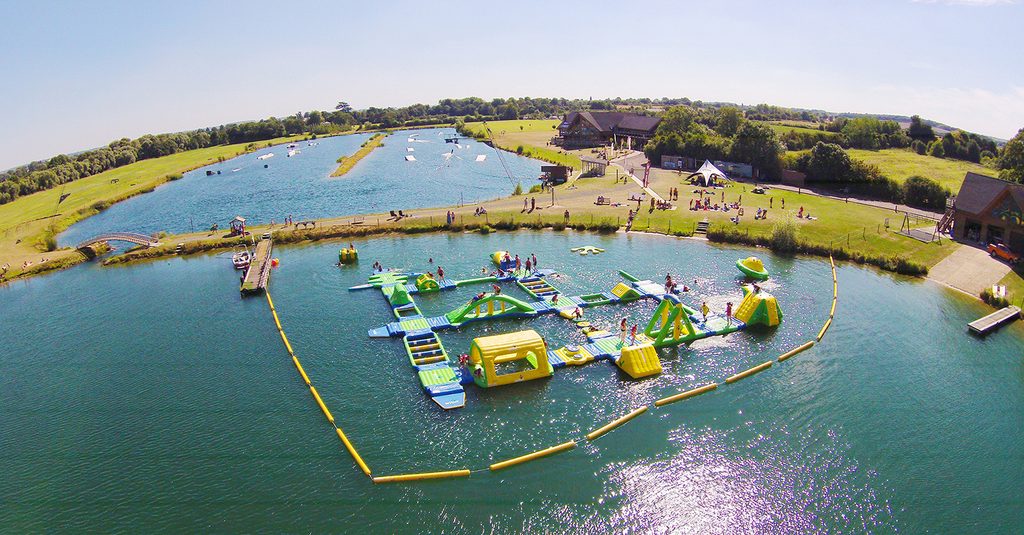
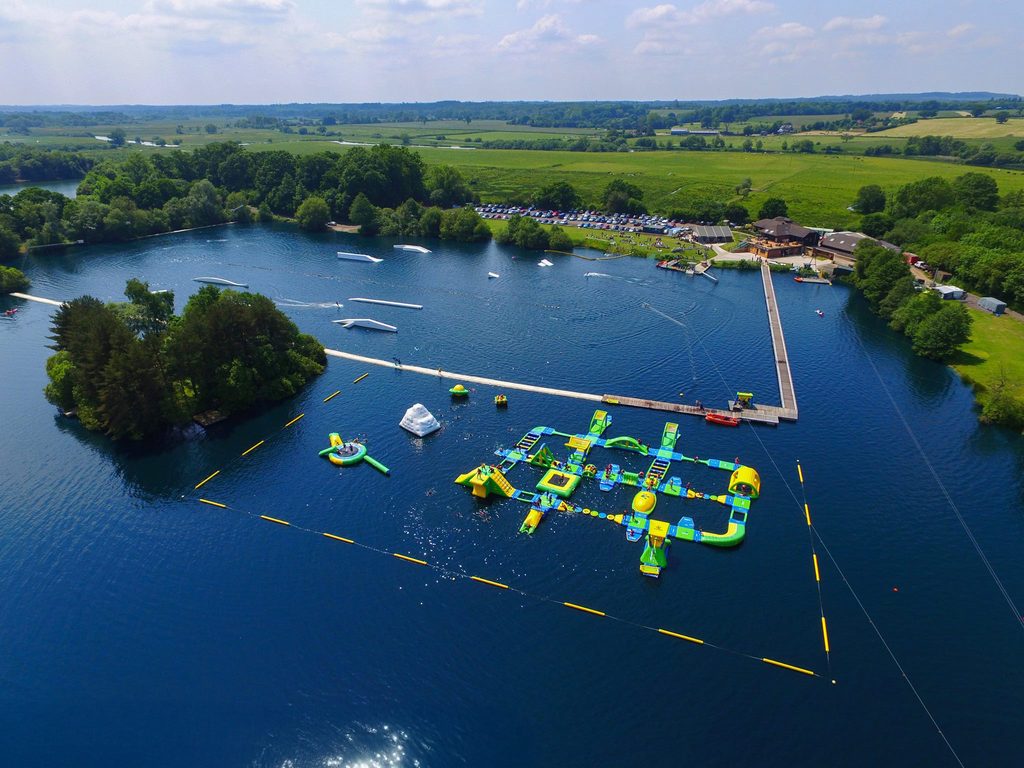
A floating water attraction can complement existing activities, attract new target groups, and turn a water sports facility into a more diverse leisure destination. Instead of replacing what already works, it can become an additional attraction that helps operators make better use of their location and infrastructure.
Why Water Sports Centers Are Expanding Their Offer
Traditional water sports activities often appeal to specific customer groups. Wakeboarding, waterskiing, kayaking, or similar activities require a certain level of interest, ability, or previous experience.
A floating water park can broaden that audience.
It creates an accessible recreational experience for families, children, teenagers, groups, and visitors who may not participate in more specialized water sports.
This means a water sports center can potentially attract customers who would otherwise never visit the facility.
The result is a broader customer base and a more diverse overall offering.
Five Ways Floating Attractions Can Grow Your Water Sports Business
1. Attract New Customer Groups
One of the biggest opportunities is reaching people who are not yet regular water sports customers.
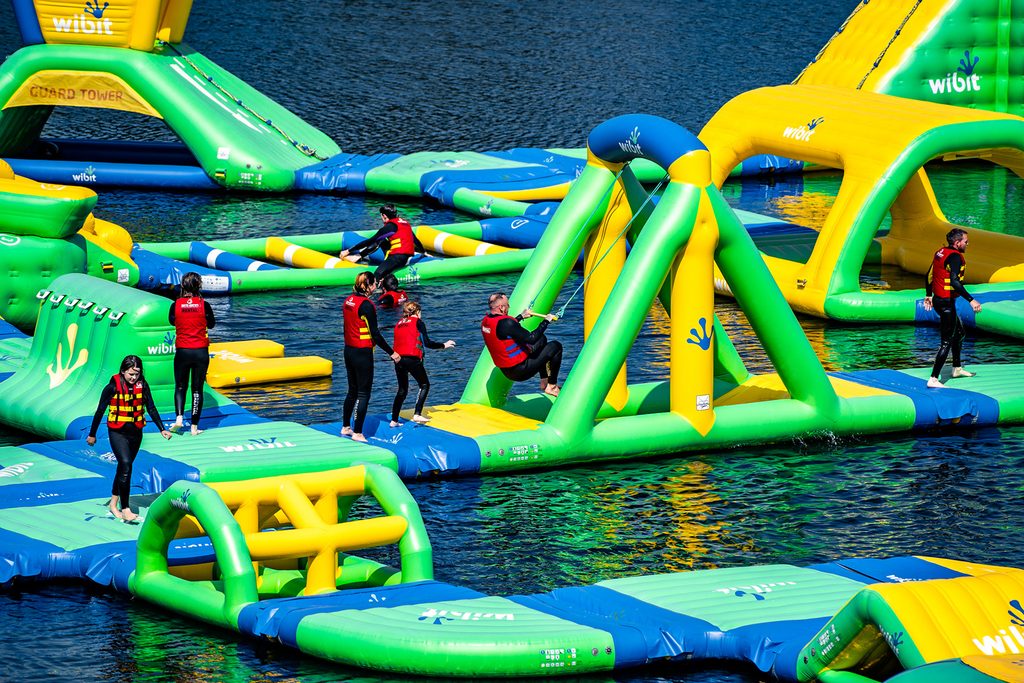
A floating obstacle course does not require the same level of experience as many traditional water sports. Participants can simply arrive, receive the necessary instructions and start exploring the attraction.
This makes it particularly appealing to:
- Families
- Children and teenagers
- School groups
- Corporate groups
- Tourists
- Birthday and private groups
- Casual visitors
The attraction can therefore act as an entry point for new customers who may later discover other activities offered by the center.
2. Create Additional Revenue Streams
Expanding the attraction portfolio can also create additional revenue opportunities.
Depending on the business model, operators can offer individual tickets, timed sessions, group bookings, or combination packages with other activities.
For example, a water sports center could combine a floating water park experience with existing activities to create a full-day package.
Additional opportunities can include:
- Group and school bookings
- Corporate events
- Birthday packages
- Multi-activity tickets
- Seasonal promotions
- Food and beverage sales
The exact business model depends on the location, target audience, and existing operations – but the attraction creates additional opportunities to monetize the water area.

3. Increase Time Spent On-Site
Getting customers through the door is only part of the challenge. The longer visitors stay, the more opportunities there are to generate additional revenue.
A floating attraction can complement other activities and encourage customers to turn a short visit into a longer experience.
A customer might start the day with wakeboarding, spend time on the floating attraction in the afternoon, and finish the day with food and drinks at the center.
For operators, this creates a more complete leisure experience and increases the potential value of each visitor.
4. Make Your Location a Destination
A water sports center with several complementary activities can become more than a place for a specific sport. It can become a destination.
This is particularly valuable in tourist regions, where visitors are searching for things to do rather than simply looking for a particular sport.
A recognizable floating attraction can also become a strong marketing asset. Eye-catching modules and active visitors naturally create visual content for websites and social media.
Instead of marketing only one activity, operators can promote an entire day of experiences.
5. Build an Offering That Can Grow With Your Business
Not every operator wants to make a large investment immediately. A modular floating attraction provides flexibility.
Operators can start with a suitable configuration based on their available space, customer base, and business objectives. As demand develops, the attraction can be expanded or adapted with additional modules.
This allows the recreational offering to grow together with the business. For operators, that means the initial investment does not have to define the final attraction.
Combining Water Sports With New Experiences
The strongest concept is often not choosing between traditional water sports and a floating water park, but combining them. Different activities can appeal to different customers throughout the day. For example:
Morning:
Wakeboarding or waterskiing
Afternoon:
Floating water park
Evening:
Food, drinks, and social activities
This creates a complete day of recreation around the same location. It can also make the center more attractive to groups where not everyone wants to participate in the same activity. A family, for example, could combine different activities according to age and interests rather than having to find separate destinations.
More Than Just an Attraction
A floating water park can also become a platform for events. Water sports centers can use their attraction for:
- Competitions
- Team-building events
- School trips
- Youth programs
- Birthday parties
- Corporate events
- Seasonal festivals
These events can introduce new customer groups to the center and create additional reasons for existing customers to return. The attraction therefore becomes part of the center’s broader business model rather than simply another piece of equipment.
What Water Sports Centers Should Consider Before Investing
Before adding a floating attraction, operators should evaluate how it fits into their existing business.
Available Water Area
The size, depth, access, and conditions of the available water area determine what type of attraction is suitable.
Target Groups
Operators should define which new customers they want to reach. A family-focused attraction may require a different configuration from one designed primarily for teenagers, groups, or adventure-oriented visitors.
Business Model
Ticketing, session duration, capacity, group bookings, combination packages and additional spending opportunities should all be considered when developing the business model.
Operations
The attraction needs to fit into existing staffing, supervision, cleaning, maintenance and storage processes.
Safety
Safety should always be a priority. Operators should consider applicable safety requirements, supervision, access and operational procedures before opening the attraction to guests.
Flexibility
A modular system allows operators to adapt the attraction over time and respond to changing customer demand.
Why Wibit?
Wibit has been developing modular floating water attractions for three decades and has delivered installations to more than 100 countries worldwide. For water sports centers, Wibit solutions can be individually configured around the available water area, existing activities, target groups and business objectives.
The modular concept allows operators to start with a suitable setup and expand their attraction as the business develops. Wibit’s support goes beyond the products themselves, including project planning, installation, operational guidance, training, maintenance, and long-term service.
Turn Your Water Sports Center Into a Full-Day Destination
Water sports centers already have the most important ingredient: the water. The next step is finding ways to make better use of it.
Adding a floating water attraction can help operators reach new customer groups, create additional revenue streams, increase time spent on-site and turn an existing water sports facility into a more diverse leisure destination.
Rather than replacing established activities, a floating attraction can complement them – and create a stronger overall business model.
Discover how Wibit can help you expand your water sports offering and create a customized floating attraction for your location.